Column · @aeispathways
Mental calculation or written working for AEIS maths preparation
When a child sits down to practise maths for the AEIS exam, one question often comes up: should they do the working in their head or write it down on paper? Both approaches have a place, and knowing when to use each can make a big difference to how a student performs under timed conditions. The AEIS test places a premium on accuracy and speed, so the choice between mental calculation and written working is not just a matter of preference. It is about matching the method to the problem and to the child's confidence level.
What the AEIS maths paper requires
The AEIS mathematics paper tests a range of topics including arithmetic, fractions, ratios, percentages, geometry and word problems. The questions are designed to assess whether a student can apply concepts and solve problems efficiently. Because the exam is timed, students cannot afford to waste precious minutes on overly elaborate written methods for simple sums, yet they also cannot risk errors from rushing through complex calculations in their head. The key lies in understanding which type of problem rewards mental calculation and which demands a clear written trail.
When mental calculation works best
Mental calculation is ideal for straightforward arithmetic and quick number sense checks. For instance, a simple addition like 45 + 27, a basic multiplication such as 12 × 8, or a simple fraction comparison can be done in the head with practice. Many students find that mental calculation saves time on easy questions, leaving more minutes for the trickier word problems later in the paper.
Another area where mental math shines is estimation. Before committing an answer, a student can quickly estimate the expected range. If the final answer falls far outside that estimate, they know to check their working. This habit can catch careless mistakes without the need to redo the entire calculation on paper.
For students who have practised mental calculation consistently, it also helps maintain momentum. There is no pause to pick up a pen; the answer comes in a few seconds. This flow is especially valuable in the final minutes of the exam when every second counts.
When written working is the safer choice
Longer or multi-step problems, especially those involving ratios, percentages, or geometry, almost always benefit from written working. A word problem that requires extracting data, setting up an equation, and solving it in stages can become confusing if done entirely in the head. Writing down each step allows the student to see the logic clearly and to check their work later if time permits.
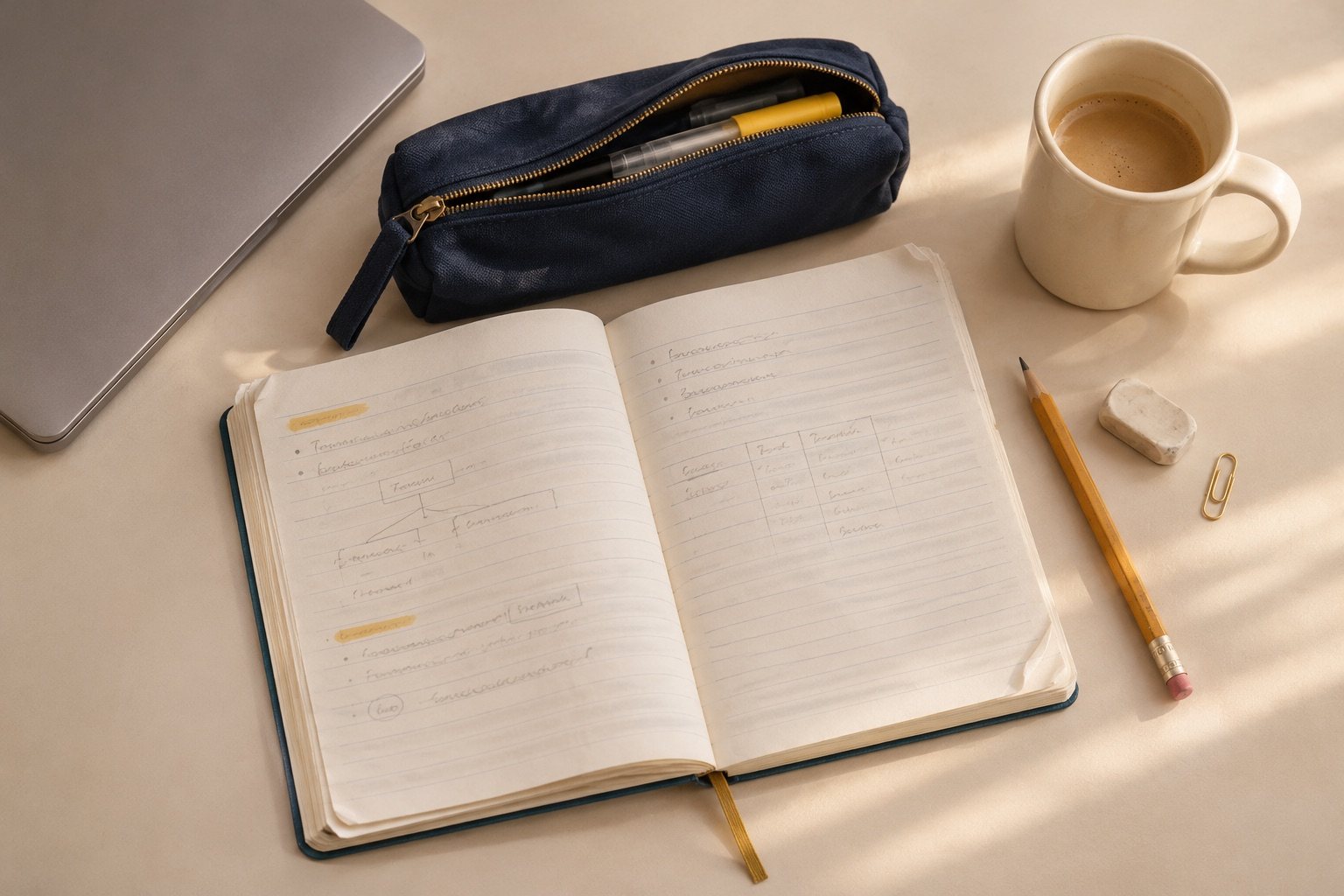
Written working also reduces the load on working memory. When a problem involves fractions with different denominators, converting them, and then adding or subtracting, holding all the intermediate numbers mentally is prone to error. Putting each step on paper means the student only needs to focus on the immediate next step, not on remembering a string of results.
Moreover, the AEIS exam expects candidates to show some working for certain types of questions. Even if the marker does not award marks for method, a clearly written solution can help the student avoid silly slips. In geometry, drawing a diagram and labelling known lengths and angles is almost essential. Without a visual record, it is easy to misapply a formula or confuse which angle corresponds to which part of the shape.
How the two approaches complement each other
Effective maths is not about choosing one method and sticking to it rigidly. It is about recognising the nature of the problem and switching between mental and written methods as needed. A good approach is to use mental calculation for the easy parts of a problem and written working for the complicated parts. For example, in a multi-step word problem, a student might mentally compute a simple subtraction early on but then write down the setup of an equation that involves a ratio.
Another useful strategy is to do a quick mental estimate before writing anything, then use written working for precision, and finally check the result mentally against the original estimate. This three-step habit builds both speed and accuracy.
When a child is doing step by step maths preparation, it is worth practising this switching skill deliberately. Set a timer and have them work through a set of problems, deciding on the spot whether to use mental or written methods. Over time, they develop an instinct for which method fits which problem. The goal is not to eliminate written working but to use it only where it adds value.
Building mental math skills for the AEIS
Mental calculation is a skill that improves with regular, short practice sessions. Simple drills on multiplication tables, common fraction equivalents (like 1/2 = 0.5, 3/4 = 0.75), and percentage conversions (like 10% of a number) can be done anywhere. Many students find that five minutes of mental math practice each day, using flashcards or a simple app, builds fluency quickly.
Another effective technique is breaking down larger calculations into smaller, manageable parts. For example, 36 × 5 can be thought of as (30 × 5) + (6 × 5) = 150 + 30 = 180. This kind of decomposition is the foundation of mental arithmetic and can be applied to many problems in the AEIS paper.

It is also important to practice mental math under time pressure. The AEIS exam has a strict time limit, so getting used to thinking fast is essential. Timed practice tests, even just a few questions at a time, help simulate the real exam environment and build confidence.
Developing effective written working habits
Written working needs to be clear and organised, not messy. A student should label each step, use proper alignment for columns, and circle or underline the final answer. Many students lose marks not because they cannot solve the problem, but because their writing is illegible or they misread their own numbers.
Another common pitfall is writing too much. Some students treat every simple subtraction as if it needs a full column method, which wastes time. The trick is to write only what is necessary to maintain accuracy and to check later. For example, for 56 + 29, a quick mental calculation is fine; but for a problem that involves converting 3/4 to a decimal and then multiplying by 45, writing down each intermediate step is wise.
United Ceres College is also on Facebook.
When doing step by step maths preparation, a student should also learn to read the question carefully before starting. It is easy to dive into calculation and later realise the question asked for a different unit or a different operation. A written plan of what to do first, second, and third can save time in the long run.
Practising with past papers and timed drills
One of the best ways to decide which method to use is to work through past AEIS maths papers. During practice, a student can note which questions they got right and which they got wrong, and reflect on whether the method they chose was appropriate. Often, errors come from using mental calculation for a problem that needed written working, or vice versa.
Timed drills are equally valuable. Set a timer for, say, 10 minutes and try to complete 10 questions of varying difficulty. The student will quickly learn that some problems are faster with mental math and others need paper. Over several sessions, they will develop a personal strategy that balances speed and accuracy.
It can also help to review each mistake and ask: was the mistake due to a slip in mental arithmetic, or was it because the written working was unclear? This reflection turns every error into a learning opportunity.

When to ask for guidance
Every student is different. Some have a natural flair for mental calculation but struggle to organise their written work. Others are meticulous with paper but freeze when asked to compute in their head. A good tutor or a structured programme can help identify these tendencies and tailor practice accordingly.
If you are unsure where your child's strengths and weaknesses lie, consider having them attempt a mixed set of problems and observe their approach. Do they reach for the pencil immediately? Do they try to solve everything mentally and then get stuck? These observations can guide the focus of practice sessions.
For families seeking structured support, United Ceres College offers preparatory programmes that include AEIS maths preparation. You can reach them at 37 Middle Rd, #05-00, Singapore 188946, phone +65 8699 3609, to discuss your child's needs.